Box & Papers: How Set Completeness Moves the Price
Posted on June 24, 2025
Ask any dealer what separates two identical watches priced $2,000 apart and the answer is usually sitting in a drawer: the box and papers. Set completeness is the quietest price driver in the pre-owned watch market — invisible in photos of the watch itself, decisive in what it sells for. Here's how the three tiers work, what each one is actually worth, and when papers matter most (and when they don't).
The three tiers
Full set. The watch plus everything it left the retailer with: presentation box, outer box, booklets, hang tags, and — the piece that matters — the warranty card or certificate. On modern Rolex, "full set" effectively means "with the card." The box is packaging; the card is identity.
Watch-only. Just the watch, sometimes on its bracelet with no extras. No box, no papers, no tags. This is the baseline everything else is measured against.
Service papers only. The watch plus documentation from a manufacturer service — a Rolex service card, a Patek extract, an Omega service receipt. No original box or warranty card. This middle tier proves the watch is genuine and was recently serviced by the people who made it, which counts for a lot.
What each tier is worth
As a rough dealer rule, a watch without box and papers trades 10–20% below the identical full-set example. The exact gap depends on the brand and the watch:
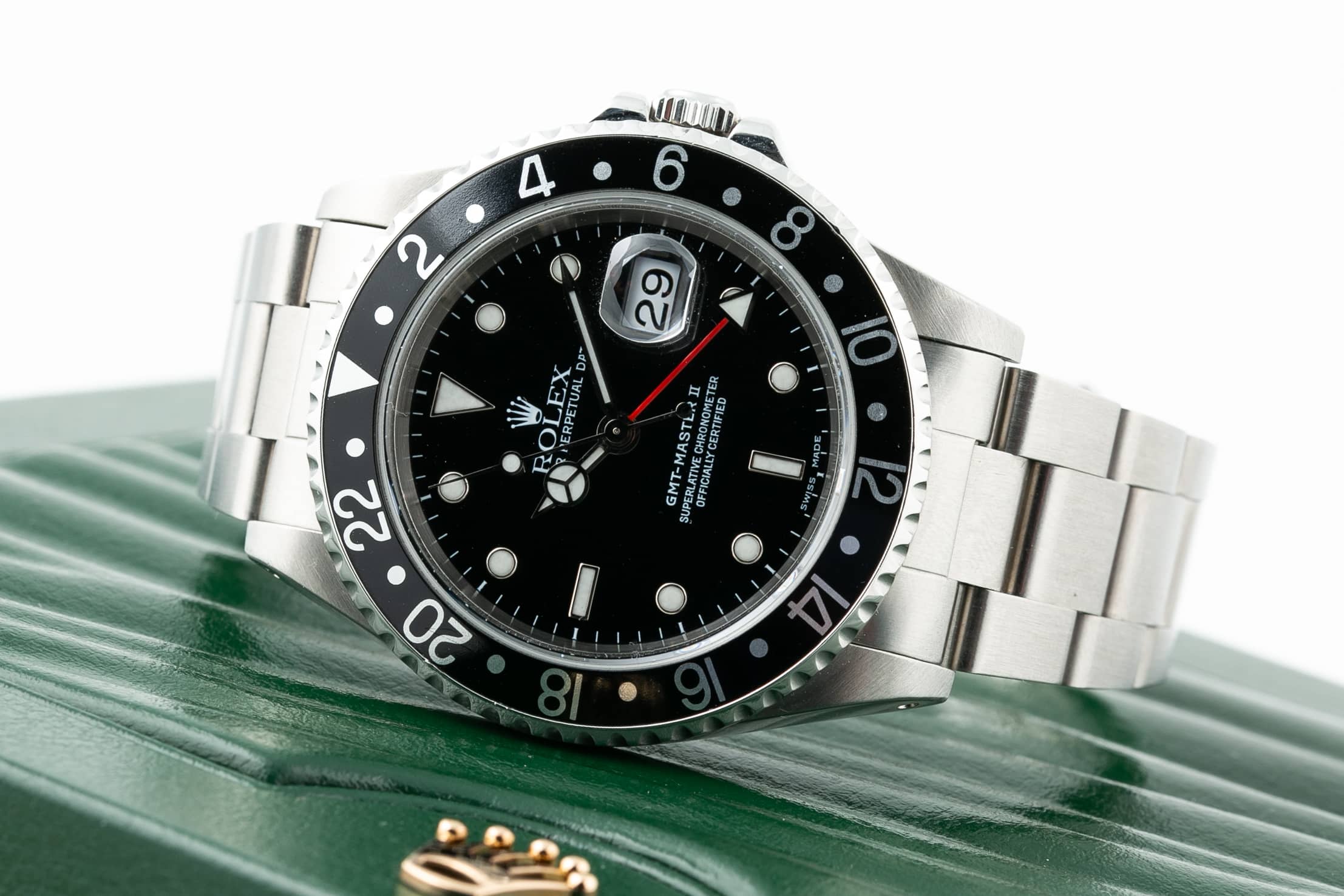
- Modern Rolex sports models (Submariner, GMT-Master II, Daytona): the gap runs about 10–15%. On a $15,000 Submariner Date, the card is worth roughly $1,500–$2,000. The market is so liquid that watch-only examples still sell quickly — they just sell cheaper.
- Patek Philippe and Audemars Piguet: the gap widens to 15–25%. Buyers at this level are more documentation-sensitive, and the certificate of origin is a bigger part of the value proposition. A Nautilus without papers is a much harder sell than a Submariner without papers.
- Vintage pieces (pre-2000): papers can be worth 20–30% or more — when they exist at all. Original punched papers on a 1960s Submariner can add five figures. But most vintage watches lost their papers decades ago, so the market prices accordingly; a watch-only vintage piece isn't "discounted," it's just normal.
- Service papers typically recover about half the full-set premium. A Rolex with a fresh service card but no original box/papers might trade 5–10% below full set rather than 10–15%. The service card answers the buyer's two biggest questions — is it real, and does it run right — which is most of what the original papers do.
These are approximate ranges as of late 2026, and condition still dominates: a mint watch-only example beats a thrashed full set every time.
When papers matter most
High-value and hype references. The more money on the table, the more buyers want documentation. On a $25,000+ piece, missing papers make buyers nervous and make dealers offer less — we're the ones taking the resale risk.
Vintage and neo-vintage. Papers anchor provenance. A 1990s Daytona with its original punched papers and service history is a different asset than the same watch with nothing. Collectors pay for the story when the story is documented.
First-time buyers of a brand. If you've never owned a Patek, the certificate is reassurance. Experienced collectors buying their tenth Rolex care less — they know what they're looking at.
When papers matter least
Modern Rolex sports watches bought to wear. If you're buying a Submariner to wear daily for ten years, watch-only at a 10–15% discount is the best value in the transaction. You're not paying for a card you'll never look at, and the watch is identical on the wrist.
Watches going straight to service. If the watch needs a manufacturer service anyway, the resulting service card rebuilds most of the documentation value. Factor the service cost into your offer and buy the discount.
Anything under ~$5,000. On entry-luxury pieces, the dollar gap is small enough that condition and seller trust matter more than the box.
Red flags in the paperwork
Papers only add value when they're right. Watch for these:
- Mismatched serials. The serial on the card must match the serial on the watch (rehaut or case). A mismatch doesn't always mean fraud — cards get swapped between watches — but it means the "papers" add zero value. Price it as watch-only.
- Wrong-era cards and boxes. A 2023 watch in a 2005-style box with a 2005-style card is an assembled set, not a full set. Period-correct packaging matters.
- Aftermarket boxes. Genuine Rolex boxes have specific construction and markings. A $30 replica box from the internet adds nothing and suggests the seller is dressing up the listing.
- Photocopied or digital-only "papers." Originals or nothing. A scan of a warranty card is not papers.
The dealer's view
Here's how I actually use this when buying: I price every watch as watch-only first — that's the floor, the number the watch itself justifies. Then I add for completeness: a bit for the box, real money for the card, something for service history. Sellers often anchor on full-set asking prices for watch-only pieces; knowing the tier gap is what keeps you from overpaying.
And one practical tip: if you buy watch-only and later find the original box and papers (it happens — sellers clean out drawers), you've just manufactured 10–15% of value for the cost of a phone call. Always ask the seller to check.
ViperWatches buys and sells across all three tiers daily — if you've got a watch with or without its papers, we can tell you exactly where it lands.
Photo: Peter WILSON (CC BY-SA 4.0) via Wikimedia Commons.
Send a Message
Have a question or looking for a particular timepiece? Let us know! At ViperWatches, we're dedicated to providing personalized service and sourcing exceptional luxury watches just for you. Our experts are ready to assist in making your horology aspirations a reality.